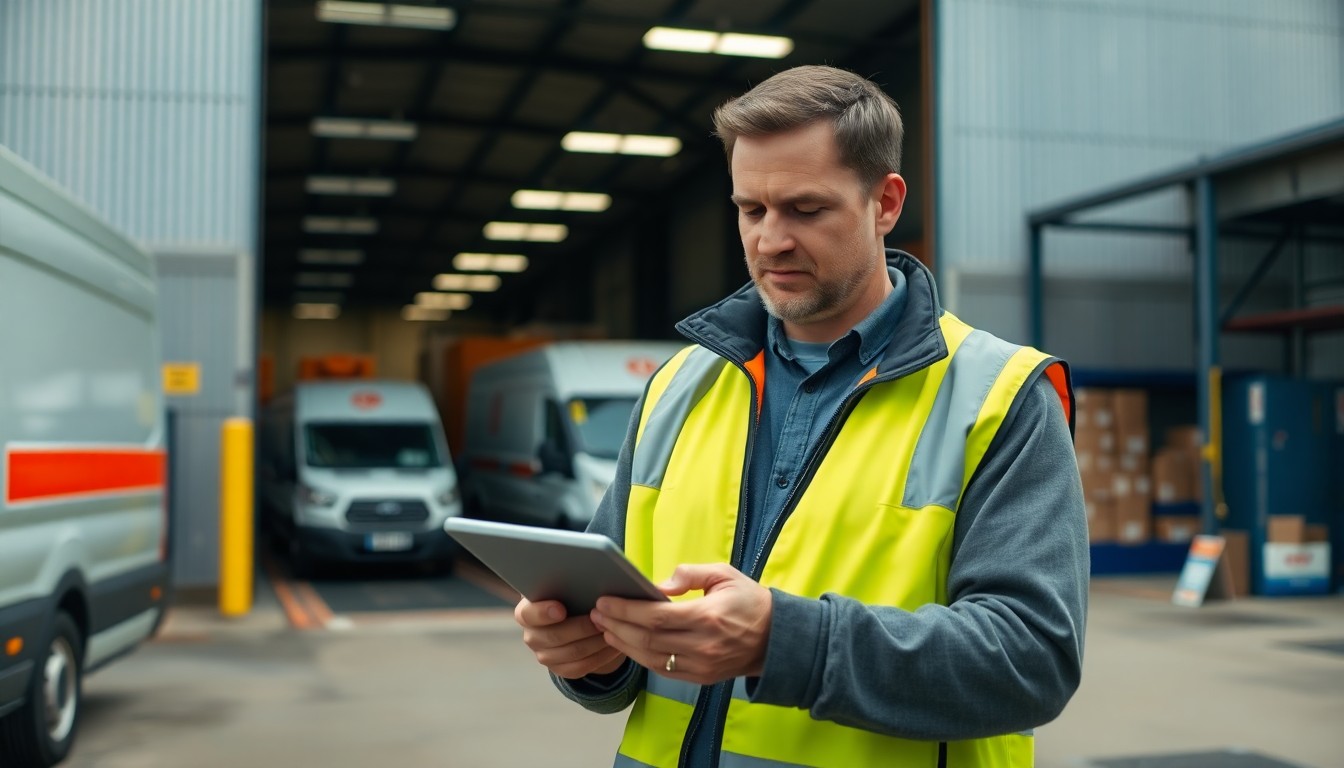
AI for UK logistics means using AI tools to optimise routes, forecast demand, manage warehouse operations, and provide supply chain visibility that reduces costs and improves delivery times. UK logistics firms that implement AI report 10 to 25% reductions in transport costs, 15 to 30% improvements in delivery accuracy, and significant gains in warehouse efficiency.
The UK logistics sector faces persistent challenges: driver shortages, fuel cost volatility, increasing customer expectations for faster delivery, and complex supply chain disruptions. AI cannot solve all of these, but it can make your operations significantly more efficient, helping you do more with the resources you have.
How Are UK Logistics Firms Using AI Today?
1. Route Optimisation
Route optimisation is the most immediately impactful AI application for logistics firms. Traditional route planning relies on a dispatcher’s experience and basic mapping tools. AI route optimisation considers dozens of variables simultaneously: traffic patterns, delivery windows, vehicle capacity, driver hours, fuel costs, and road restrictions.
AI tools analyse historical traffic data, real-time road conditions, and your delivery schedule to produce the most efficient route for each vehicle. For a firm running 10 to 50 vehicles, this typically reduces total miles driven by 10 to 20%, saving fuel, time, and wear on vehicles.
The key benefit is not just the optimised route itself but the ability to re-optimise dynamically. When a delivery is delayed, a new order comes in, or traffic conditions change, AI recalculates routes in real time, something a human dispatcher simply cannot do fast enough.
2. Demand Forecasting
Knowing what goods will be needed, where, and when is critical for logistics planning. AI demand forecasting uses historical data, seasonal patterns, market trends, and external factors (weather, events, economic indicators) to predict demand with much higher accuracy than traditional methods.
For warehousing and distribution, this means you can pre-position inventory, plan capacity, and manage staffing levels more effectively. Instead of reacting to demand spikes, you anticipate them.
UK logistics firms using AI demand forecasting report 20 to 40% improvements in forecast accuracy compared to spreadsheet-based methods, leading to reduced stockouts, lower inventory holding costs, and better warehouse space utilisation.
3. Warehouse Management
AI-powered warehouse management systems optimise every aspect of warehouse operations:
Slotting optimisation. AI analyses order patterns and reorganises warehouse layouts so the most frequently picked items are in the most accessible locations. This reduces picking time by 15 to 25%.
Pick path optimisation. AI calculates the most efficient path through the warehouse for each picking run, reducing walking time by 20 to 40%.
Labour planning. AI forecasts labour needs based on order volume and schedules staff accordingly, reducing overtime costs and improving efficiency.
Inventory accuracy. AI tools monitor stock levels in real time, flag discrepancies, and predict when stock will run out, enabling proactive reordering.
For a warehouse operation with 5,000 or more SKUs, these optimisations can save hundreds of hours per month in picking and labour costs.
4. Supply Chain Visibility
AI provides end-to-end visibility across your supply chain, from supplier to final delivery. It tracks shipments, predicts delays, identifies bottlenecks, and alerts you to potential disruptions before they become critical.
For logistics firms managing complex supply chains with multiple suppliers, carriers, and destinations, this visibility is invaluable. Instead of finding out about a delay when a customer complains, you know about it early and can take action.
AI tools can also identify patterns in supply chain disruptions, helping you build resilience by diversifying suppliers or adjusting inventory levels for high-risk items.
5. Fleet Management and Predictive Maintenance
AI monitors vehicle telematics data to predict when maintenance is needed before a breakdown occurs. By analysing patterns in engine data, fuel consumption, and driving behaviour, AI can flag vehicles that need attention and schedule maintenance proactively.
This reduces unplanned downtime, extends vehicle life, and lowers maintenance costs. For a fleet of 20 vehicles, predictive maintenance typically saves £10,000 to £25,000 per year in avoided breakdowns and emergency repairs.
6. Customer Communication
Logistics firms spend significant time updating customers on delivery status. AI can automate this communication, sending proactive updates when deliveries are scheduled, in transit, delayed, or completed.
A conversational AI assistant can handle customer delivery queries, tracking requests, and booking changes automatically. See our conversational AI guide for how this works.
What AI Tools Are Available for UK Logistics SMEs?
The AI tool landscape for logistics includes options at various price points:
Route optimisation: Tools like Routific, OptimoRoute, and Descartes offer AI-powered route planning from £100 to £500 per vehicle per month.
Warehouse management: AI-enhanced WMS platforms like Linnworks, Mintsoft, and Orderwise provide slotting, pick path, and inventory optimisation.
Demand forecasting: Tools that integrate with your inventory system to provide AI-powered demand predictions, from £200 to £1,000 per month.
Fleet management: Telematics platforms with AI predictive maintenance features, like Samsara, Geotab, and Microlise.
Supply chain visibility: Platforms that provide end-to-end tracking and disruption prediction, with options available for SME budgets.
The key is choosing tools that integrate with your existing systems rather than creating new data silos. Our AI implementation service can help you evaluate and deploy the right combination.
How Much Can a UK Logistics Firm Save with AI?
Based on implementations with UK logistics firms:
| Area | Typical saving |
|---|---|
| Route optimisation | 10-20% reduction in fuel and mileage costs |
| Demand forecasting | 20-40% improvement in forecast accuracy |
| Warehouse picking | 15-25% reduction in picking time |
| Predictive maintenance | £500-£1,250 per vehicle per year |
| Customer communication | 60-80% reduction in status update calls |
For a firm with 20 vehicles and a 10,000 sq ft warehouse, total annual savings typically range from £40,000 to £100,000, with payback in 3 to 6 months.
What Are the Challenges of Implementing AI in Logistics?
Data quality. AI needs good data to work. If your telematics, inventory, and order data are not clean and well-organised, AI results will be unreliable. Start with a readiness audit to assess your data.
Integration complexity. Logistics firms often have multiple systems that do not talk to each other. AI tools need data from all of them to work effectively, which may require integration work.
Change management. Drivers, warehouse staff, and dispatchers need to trust and adopt AI recommendations. If they override the system because they think they know better, the benefits are lost. Training and change management are essential.
Cost justification. AI in logistics requires upfront investment. The returns are significant but take 3 to 6 months to materialise. You need to be prepared to invest before you see returns.
How Do You Get Started with AI in Logistics?
-
Start with route optimisation. It delivers the fastest, most visible return and requires the least data preparation.
-
Get your data in order. Before implementing warehouse or demand forecasting AI, ensure your inventory and order data is clean and accessible.
-
Choose tools that integrate. Select AI tools that connect to your existing transport management and warehouse management systems.
-
Train your team. Drivers and dispatchers need to understand how to use AI recommendations and why they are better than manual planning. Our AI training service covers this.
-
Measure and expand. Track fuel savings, delivery accuracy, and warehouse efficiency. Use the results to justify investment in additional AI capabilities.
Recommended Reading
- AI Automation for Business Workflows - Broader automation approaches
- AI vs Automation: What UK SMEs Actually Need - Understanding when AI versus automation is the right tool
- How to Implement AI in a Small Business UK - Step by step implementation guide
Optimise Your Logistics Operation with AI
If you run a UK logistics business and want to reduce transport costs, improve delivery accuracy, and streamline warehouse operations, book a free discovery call. We work with UK logistics SMEs to implement AI that delivers measurable savings. Explore our AI for logistics industry page and our AI automation services for more details.