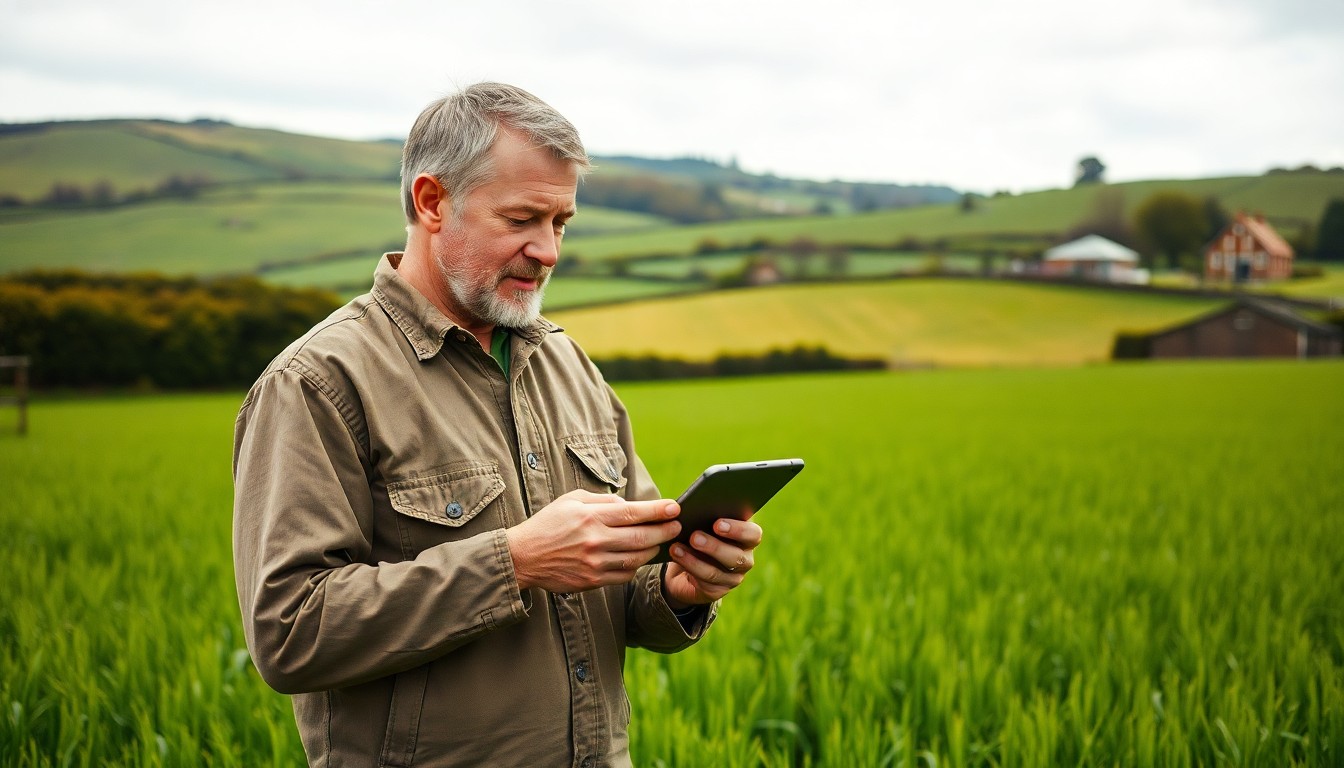
AI for UK agriculture means using AI tools to monitor crop health, predict yields, manage livestock, optimise inputs, and improve supply chain efficiency without requiring enterprise-scale investment. UK farms that adopt AI report 10 to 20% reductions in input costs, 5 to 15% improvements in yield, and significant savings in labour time for monitoring and planning tasks.
UK agriculture faces unprecedented challenges: volatile input costs, changing weather patterns, labour shortages, tightening environmental regulations, and thin margins. AI cannot control the weather or the market, but it can help you make better decisions with the resources you have, from optimising fertiliser application to predicting which fields will yield best.
How Are UK Farms Using AI Today?
1. Crop Monitoring and Disease Detection
AI-powered image analysis can identify crop diseases, pest infestations, and nutrient deficiencies from photos taken with a smartphone or drone. Instead of walking every field to check for problems, farmers can photograph crops and let AI flag areas that need attention.
Tools like Plantix and CropX use AI to analyse images and provide diagnoses and treatment recommendations. This reduces the time spent on crop monitoring and catches problems earlier, before they spread and reduce yield.
For a 500-acre arable farm, AI-assisted crop monitoring can save 20 to 30 hours per week during the growing season and reduce crop losses by 10 to 15% through earlier detection of problems.
2. Yield Prediction and Planning
AI can predict crop yields with much higher accuracy than traditional methods by combining historical yield data, weather forecasts, soil conditions, satellite imagery, and crop models. This helps farmers plan harvesting, storage, and sales with more confidence.
Accurate yield prediction means you can commit to supply contracts with confidence, plan labour for harvest, and arrange storage and transport in advance. For farms supplying processors or retailers, this predictability is increasingly expected.
AI yield prediction typically improves accuracy by 15 to 30% compared to traditional estimates, reducing waste from overestimation and lost sales from underestimation.
3. Input Optimisation
AI helps farmers apply the right amount of inputs (fertiliser, water, pesticides, and seed) in the right place at the right time. By analysing soil data, crop needs, weather conditions, and historical results, AI can produce variable-rate application maps that optimise input use.
This precision approach reduces input costs by 10 to 20% while maintaining or improving yields. It also helps farms meet environmental requirements by reducing excess fertiliser and pesticide use, which is increasingly important under UK environmental schemes.
For a mixed farm spending £50,000 to £100,000 per year on inputs, a 15% reduction represents £7,500 to £15,000 in annual savings.
4. Livestock Management
AI is transforming livestock management through computer vision and sensor data. AI cameras can monitor animal behaviour, detect signs of illness or distress, and alert farm staff to individual animals that need attention.
For dairy farms, AI can analyse milk production data, detect health issues early, and optimise feeding regimes. For beef and sheep farms, AI can monitor weight gain, detect lameness, and track body condition scoring automatically.
This early detection reduces treatment costs, improves animal welfare, and increases productivity. Farms using AI livestock monitoring report 15 to 25% reductions in health-related losses and significant labour savings in animal checking.
5. Weather and Market Intelligence
AI can provide hyper-local weather forecasts and market price predictions that help farmers make better timing decisions. When to spray, when to harvest, when to sell, and when to store are all decisions that AI can support with data.
For UK farmers operating on thin margins, getting these timing decisions right can make the difference between profit and loss in a given season. AI tools that combine weather data, market prices, and farm-specific data provide the intelligence to make better decisions.
6. Supply Chain and Traceability
AI can track produce from field to customer, providing the traceability that retailers and consumers increasingly demand. It can also optimise supply chain logistics, matching supply to demand and reducing waste.
For farms selling direct to consumers, restaurants, or retailers, AI can manage inventory, predict demand, and automate ordering. See our AI for logistics guide for supply chain optimisation approaches.
What AI Tools Are Available for UK Farmers?
Crop monitoring: Plantix, CropX, and drone-based imaging tools with AI analysis
Yield prediction: Platforms that combine satellite data, weather data, and farm records
Variable-rate application: Precision agriculture tools that produce input application maps
Livestock monitoring: AI camera systems and sensor platforms for animal health monitoring
Weather and market intelligence: AI-powered forecasting and market analysis tools
Farm management with AI: Farm management software that is adding AI features for planning and analysis
Many of these tools are available at price points accessible to small and medium farms, with subscription costs ranging from £50 to £500 per month. The key is choosing tools that work with your existing equipment and data systems. Our AI implementation service can help you evaluate and deploy the right combination.
How Much Can a UK Farm Save with AI?
Based on implementations with UK farms:
| Area | Typical saving |
|---|---|
| Input optimisation | 10-20% reduction in input costs |
| Crop monitoring | 10-15% reduction in crop losses |
| Yield prediction | 15-30% improvement in prediction accuracy |
| Livestock monitoring | 15-25% reduction in health-related losses |
| Labour time | 15-25 hours per week saved on monitoring |
For a 500-acre arable farm spending £75,000 per year on inputs, the annual savings from input optimisation alone are £7,500 to £15,000. Add crop loss reduction and labour savings, and total annual benefits typically range from £15,000 to £35,000, with payback in 6 to 12 months.
What Are the Challenges of Implementing AI on a UK Farm?
Connectivity. Many UK farms still have poor internet connectivity, which is a barrier to cloud-based AI tools. Check your connectivity before investing, and look for tools that work offline or with intermittent connections.
Data quality. AI needs good data to work. If your farm records are inconsistent or incomplete, AI results will be unreliable. Start by getting your data in order. See our AI readiness checklist.
Equipment integration. AI tools need to work with your existing tractors, sensors, and software. Check compatibility before investing.
Skills and training. Farm teams need to understand how to use AI tools effectively. This does not mean becoming a data scientist, but it does require training. Our AI training service covers agricultural AI use.
Cost justification. Farm margins are tight, and AI investment needs to deliver clear returns. Start with the application that will deliver the fastest payback, which is usually input optimisation or crop monitoring.
How Do You Get Started with AI on Your Farm?
-
Start with crop monitoring. Smartphone-based tools are affordable and deliver immediate value in early problem detection.
-
Get your data in order. Ensure your field records, yield data, and input records are consistent and accessible.
-
Add input optimisation. Use AI to produce variable-rate application maps for fertiliser and seed.
-
Implement yield prediction. Use AI to improve your yield forecasts for better planning and marketing.
-
Train your team. Ensure everyone understands how to use the AI tools and interpret the results. Our AI training service covers this.
-
Measure results. Track input savings, yield improvements, and labour savings to justify further investment.
Recommended Reading
- AI vs Automation: What UK SMEs Actually Need - Understanding when AI versus automation is right for your farm
- AI Readiness Checklist - Is your farm ready for AI?
- How to Implement AI in a Small Business UK - Step by step implementation guide
Bring AI to Your Farm
If you run a UK farm and want to reduce input costs, improve yields, and save time on monitoring, book a free discovery call. We work with UK agricultural businesses to implement AI that is practical, affordable, and delivers measurable ROI. Explore our AI for agriculture industry page and our AI implementation services for more details.